
巴別塔的雲梯:多語與跨界的人文願景-《生理人語法》序文
巴別塔的雲梯:多語與跨界的人文願景,《生理人語法》(Arte Sangley)序文,清華大學出版社,2025 年 12 月,p.p. v-vii; p.p. ix-xi 。
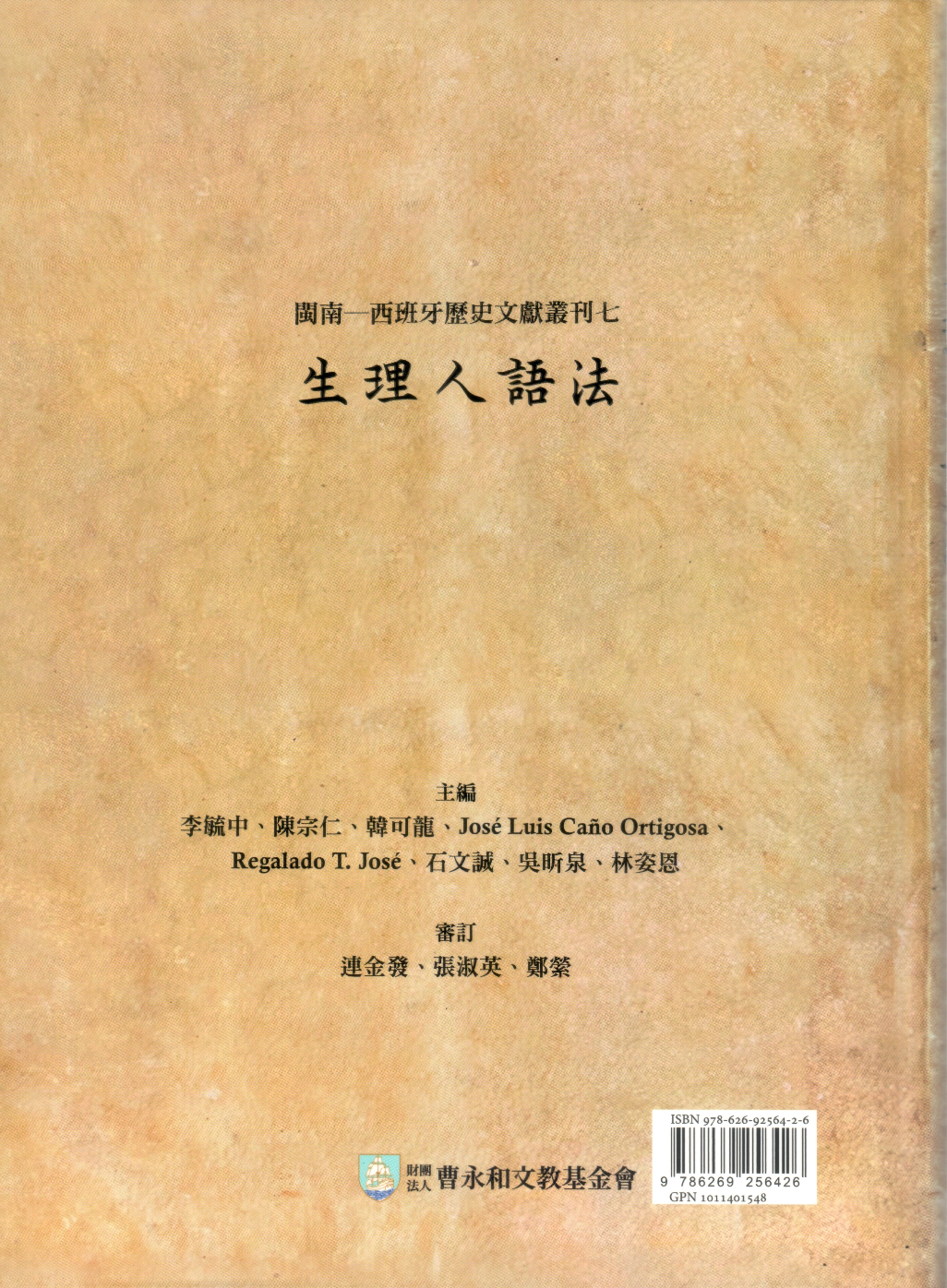
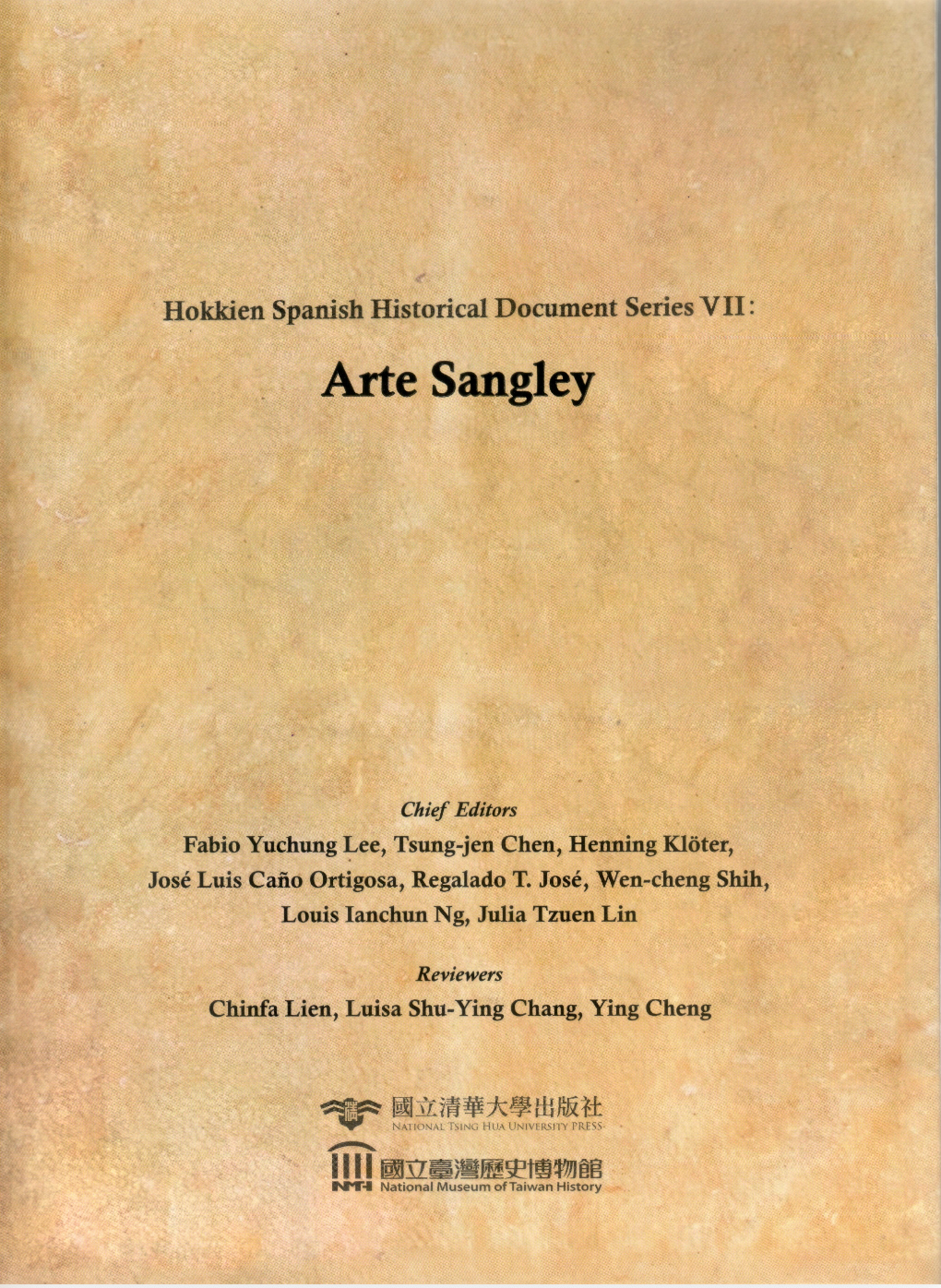
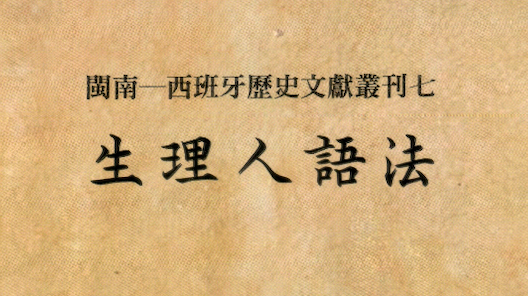
閩南-西班牙歷史文獻叢刊七
清華大學歷史所李毓中副教授帶領組成的「閩南—西班牙歷史文獻叢刊」出版與研究團隊,從二O一八年開始迄今總共出版七個系列、十二冊手稿摹本: 包括《西班牙—華語辭典》(Diccionario Hispanico-Sinicum)、《漳州話語法》(Arte de la Lengua Chio Chiu)、《奧古斯特公爵圖書館菲律賓唐人手稿》(Philippine Chinese Manuscripts in the Herzog August Library)、《明心寶鑑》(Espejo Rico del Claro Corazón —Beng Sim Po Cam)、《無極天主政教真傳實錄》(Rectificación y Mejora de Principios Naturales)、《華語—西班牙語詞典》(Dictionarium Sino-Hispanicum)、《新刊格物窮理便覽》(Símbolo de la fe, en lengua y letra China)、《漳州話詞彙與語法》(Vocabulary & Grammar Chin-Cheu)、《新刊僚氏正教便覽》(Memorial de la vida christiana en lengua china) 及《生理人語法》(Arte Sangley)。
這些文獻的原始手稿典藏在世界各國的圖書館:馬尼拉聖多瑪斯大學、巴塞隆納自治大學、德國奧古斯特公爵圖書館、西班牙國家圖書館、羅馬安吉利卡圖書館、奧地利國家圖書館、大英圖書館、西班牙奧古斯丁修會; 泰半為閩南語、華語和西班牙語三語共構的手稿(還混雜了塔加路語、那瓦語…等可能的原住民語或東南亞詞彙)。馬尼拉成為這系列叢刊的「接觸地帶」(contact zone),讓我們看到東西方語言交流的歧路花園,生理人經商維生的本能和韌性,宣教人士焚稿繼晷、手不釋卷的筆耕,以及各地文化融合的交相輝映; 我們藉知識共鳴,體會前人篳路藍縷、跨洋渡海的冒險與探索,牽引如今的我們潛心鑽研「知識的黃金寶山」(El Dorado)。二O二六年適逢西班牙人與美麗島相遇四百年(1626-1642),這系列文獻恰是最好的見證。
「閩南—西班牙歷史文獻叢刊」的淵源始自二O一五年,由清大歷史所和中研院臺史所合作啟始,後由清華人社院主任黃一農院士大力支持,毓中老師本著專業的職志和求知的熱情,鍥而不捨持續挖掘,一樣跨洋渡海,從未知的他鄉異邦——像希臘神話的特修斯憑著線團,從迷宮中找到出口,陸續讓這些文獻面世,與更多有心在此領域鑽研的同好分享。這批手稿摹本如星辰列陣,非一日之功,不僅是取得授權的付出,更多是苦心孤詣的精力和執著。而今,盱衡先人智慧的結晶,從大航海時期迄今的幾個世紀以來,日升月恆,放眼看去,我認為我們最有能力,也最應引領從事這些文獻的研究,繼而影響全球的關注和投入。
隨著不同文獻的發現和出版,研究團隊的成員越見豐富與多元。我個人從二O一六年起,受毓中老師邀請加入團隊,發現有閩南語、漢學、歷史學、宗教、華語、西班牙語的專家學者,合作交流的國際學人還有葡語、塔加路語、法語、西籍、菲律賓籍、日籍、荷蘭、德國、義大利…等同道知音。在這樣多語種、專業多元的團隊氛圍中,每個人體驗到人文社科領域未來研究的願景:那就是跨領域、跨界之必要。科技日新月異進展的世界,傳統獨立/獨力研究的窠臼不再能與之抗衡。這批文獻儼然已是語言混亂的巴別塔,團隊跨文化的結合是要挑戰知識,若能有彼時《聖經》所說的「野心勃勃」,合力去鑽研探勘,那是我們期待擁有的宏願。
西班牙皇室(當今國王菲利普六世的姑父姑母)主導的「索里亞公爵基金會」於二O二三年設立了「第一屆國際西班牙語學研究講座」,我們的團隊涵括五個國家、六個學術單位、十名研究人員 (李毓中、連金發、張淑英、鄭縈、陳宗仁、吳昕泉、崔越優、José Luis Caño Ortigosa, Regalado Trota José 和 Henning Klöter-韓可龍) 躬逢其盛,剛好出版了五個系列共九冊的手稿摹本,而團隊成員也都有相關學術著作發表,在國際各國團隊競優中得到了這第一屆講座的首獎。我們前去領獎、發表研究成果,也帶去了西班牙黃金世紀(十六,十七世紀)殖民菲律賓留下的這批辭典、教義手稿摹本,贈送基金會,同時也饋贈給西班牙國家圖書館,以及西班牙皇家學院典藏。對西班牙而言,這套文獻或許召喚了過去的輝煌,但今日我們關注的是彼時的全球化和文化交流是如何樣貌,又怎樣讓今日的我們發現別人,認識自己。
西班牙語說 “El saber no ocupa lugar”(知識不佔空間),過去七年,研究團隊透過多次研討會和讀書會,已經在巴別塔上搭建七巧彩虹雲梯,那是知識的建築與力量,它不佔空間,永遠向高空盤登,但不會搆到穹頂; 我們冀望年輕世代接力研發,讓彩霞滿天。二O二三年聯合國教科文組織認證耶穌會教士佩德羅·馬爾曼(Pedro Marbán)編寫的玻利維亞原住民摩薩語-西班牙語辭典為「世界記憶」的文化遺產。拉丁名言道: «verba volant, scripta manent» (說出的話飛走了,寫下的字留住了)。我們相信持續努力,這批文獻也會構築閩南-華語-西班牙語的「波多西」(Potosí)。
Babel’s Ladder: Multilingual and Interdisciplinary Humanistic Horizons
Under the leadership of Associate Professor Fabio Yuchung Lee of the Graduate Institute of History at National Tsing Hua University, the Hokkien–Spanish Document Series has, since 2018, published seven series comprising twelve volumes of manuscript facsimiles. These include: Diccionario Hispánico–Sinicum; Arte de la Lengua Chio Chiu; Philippine Chinese Manuscripts in the Herzog August Library; Espejo Rico del Claro Corazón (Beng Sim Po Cam); Rectificación y Mejora de Principios Naturales; Dictionarium Sino–Hispanicum; Símbolo de la fe, en lengua y letra China; Vocabulary & Grammar Chin-Cheu; Memorial de la vida christiana en lengua china; and Arte Sangley.
The manuscripts are preserved in institutions worldwide: the University of Santo Tomás in Manila, the Autonomous University of Barcelona, the Herzog August Library in Germany, the National Library of Spain, the Angelica Library in Rome, the Austrian National Library, the British Library, and the Augustinian Order in Spain. Most of these manuscripts are trilingual—Hokkien, Chinese, and Spanish—interwoven with elements of Tagalog, Nahuatl, and other indigenous or Southeast Asian languages. Manila emerges as a pivotal “contact zone,” revealing a vibrant nexus of linguistic and cultural exchange: the resilience and curiosity of Sangleyes, the unwavering dedication of missionaries, and the dynamic interplay of diverse traditions. Through these manuscripts, we engate with the maritime journeys and intellectual pursuits of our predecessors, whose explorations guide us today toward the knowledge of El Dorado. As 2026 marks the 400th anniversary of the Spanish encounter with Formosa (1626–1642), this corpus stands as a timely and compelling testament to global entanglement.
The project traces its origins to 2015, when it began as a collaboration between the Graduate Institute of History at NTHU and the Institute of Taiwan History at Academia Sinica. It later received strong support from Academician Yi Long Huang, Director of the Research Center for Humanities and Social Sciences at NTHU. Motivated by professional rigor and an enduring passion for knowledge, Professor Lee undertook extensive research across languages, archives, and continents—resembling Theseus navigating the labyrinth with a guiding thread—gradually recovering these overlooked manuscripts and making them accessible to a growing scholarly community. Confronted with these crystallizations of early modern wisdom —accumulated over centuries since the Age of Discovery, we recognize both the capacity and the responsibility to advance research and foster global awareness of their significance.
As the project grew, so too did the diversity of the research team. Since joining in 2016 at Professor Lee’s invitation, I have worked alongside specialists in Hokkien linguistics, Sinology, history, religion, Chinese language, and Spanish, as well as international scholars versed in Portuguese, Tagalog, French, and other fields. Colleagues from Spain, the Philippines, Japan, the Netherlands, Germany, and Italy have further enriched our intellectual landscape. Within this multilingual and multicultural environment, we have shared a clear vision for the future of the humanities and social sciences: the imperative of interdisciplinary and cross-cultural collaboration. In an era of rapid technological transformation, traditional models of isolated scholarship can no longer keep pace. This corpus has become a new Tower of Babel, and our team seeks to confront its intellectual challenges together—with the “ambition” described in Scripture—as our collective scholarly aspiration.
In 2023, the Foundation of the Dukes of Soria, led by relatives of the Spanish royal family (the uncle and aunt of King Felipe VI), established the First International Hispanism Seminar Award. Our team—representing five countries, six academic institutions, and ten researchers (Fabio Yuchung Lee, Chinfa Lien, Luisa Shu-Ying Chang, Ying Cheng, Tsung-jen Chen, Louis Ianchun Ng, Carolina Yueyou Cui, José Luis Caño Ortigosa, Regalado Trota José y Henning Klöter —was honored to receive the inaugural prize, in recognition of five published series totaling nine volumes, along with related scholarly contribution. During the award ceremony, we presented our research and offered the Foundation facsimile editions of manuscripts produced in the Philippines during the Spanish Golden Age (16th–17th centuries). Additional sets were donated to the National Library of Spain and the Royal Spanish Academy. For Spain, this corpus may evoke a brilliant past; for us, it offers a lens through which to examine early global exchanges and reflect on how we might better understand others—and ourselves—today.
The Spanish saying “El saber no ocupa lugar” (“Knowledge takes up no place”) reminds us of the boundless nature of intellectual inquiry. Over the past seven years, through conferences and workshops, our team has constructed a rainbow ladder atop this Tower of Babel: an edifice of knowledge that ascends without limit, never reaching the heavens, yet always striving upward. We hope future generations will continue this ascent, illuminating the sky with new insights.
Also in 2023, UNESCO inscribed Jesuit Pedro Marbán’s Moxa–Spanish dictionary — a lexicon of the Bolivian indigenous language— into the Memory of the World register. As the Latin maxim affirms, “verba volant, scripta manent” (“Spoken words fly away, written words remain”). With sustained effort, we believe this body of manuscripts will likewise become a Sino–Hispanic “Potosí” of Hokkien, Chinese, and Spanish knowledge.
 張淑英 Luisa Shu-Ying Chang